Weeks 0–1
1Get ready — make it sound right
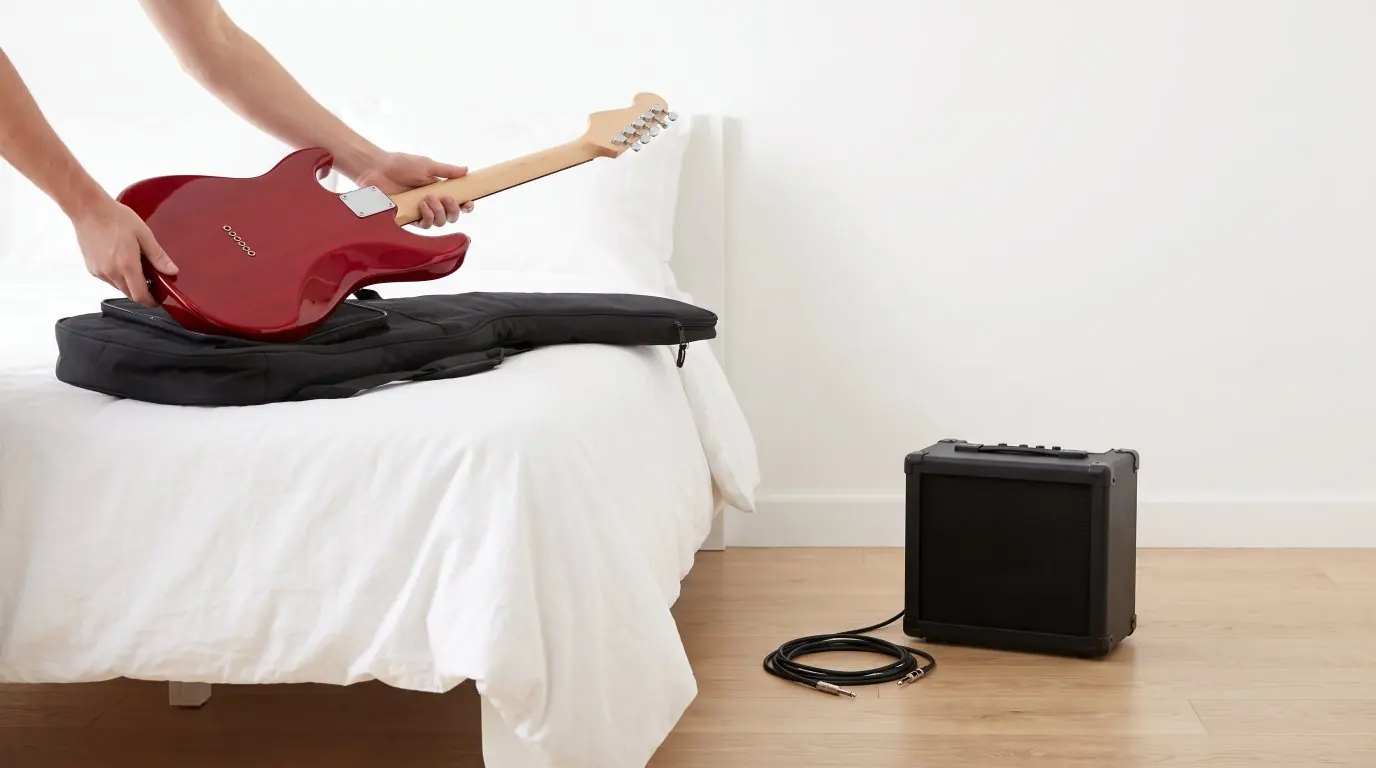
- Get your gear. The instrument, plus (for electric and bass) an amp and cable, and a clip-on tuner. Missing something? See Find my guitar and the gear guide.
- Hook-up order. Amp volume at 0 → plug in the cable → power on → raise the volume slowly. Following this order keeps a loud pop from damaging the speaker.
- Standard tuning. From the thickest string: E · A · D · G · B · E (bass: E · A · D · G). Clip the tuner onto the headstock and go one string at a time. No tuner yet? Tune right now with the First Guitar tuner. How to tune
- Learn the string names. String 6 (the thickest) is E, and string 1 (the thinnest) is also E: "E-A-D-G-B-E."
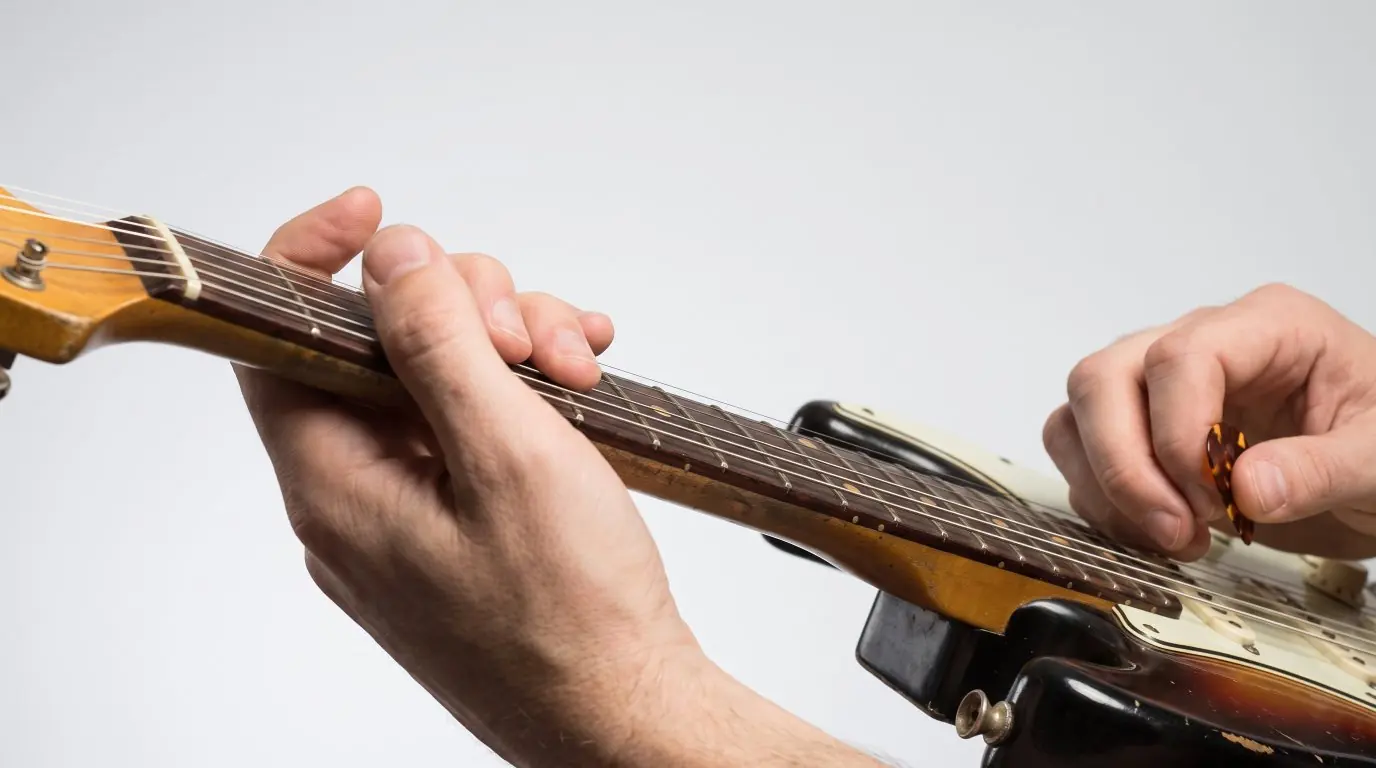
- Sitting and holding the pick. Rest the guitar's waist on your right thigh, with the neck tilted slightly up. Hold the pick between the pad of your thumb and the side of your index finger. See posture
- Get a setup. New or used, one shop setup ($50–110). With the right string height, pressing gets half as hard.
Common mistakes. Practicing out of tune, deciding "I just can't play," and quitting. Turning the amp gain all the way up so you can't hear what you're playing. Use a clean tone for the first 2 weeks.
| Acoustic | Setup matters even more. An acoustic with high action is truly hard to play. Buy a capo along with it. |
| Classical | Start with a footstool and the guitar on your left thigh. New nylon strings keep stretching for over a week, so tune every day. |
| Bass | Make sure it's a bass amp (never a guitar amp). Set the strap so the bass sits at the same height sitting and standing. |
Ready for the next stage when you can tune in under 30 seconds and name the strings.
You can pick up from here on the home page (saved on this device only).