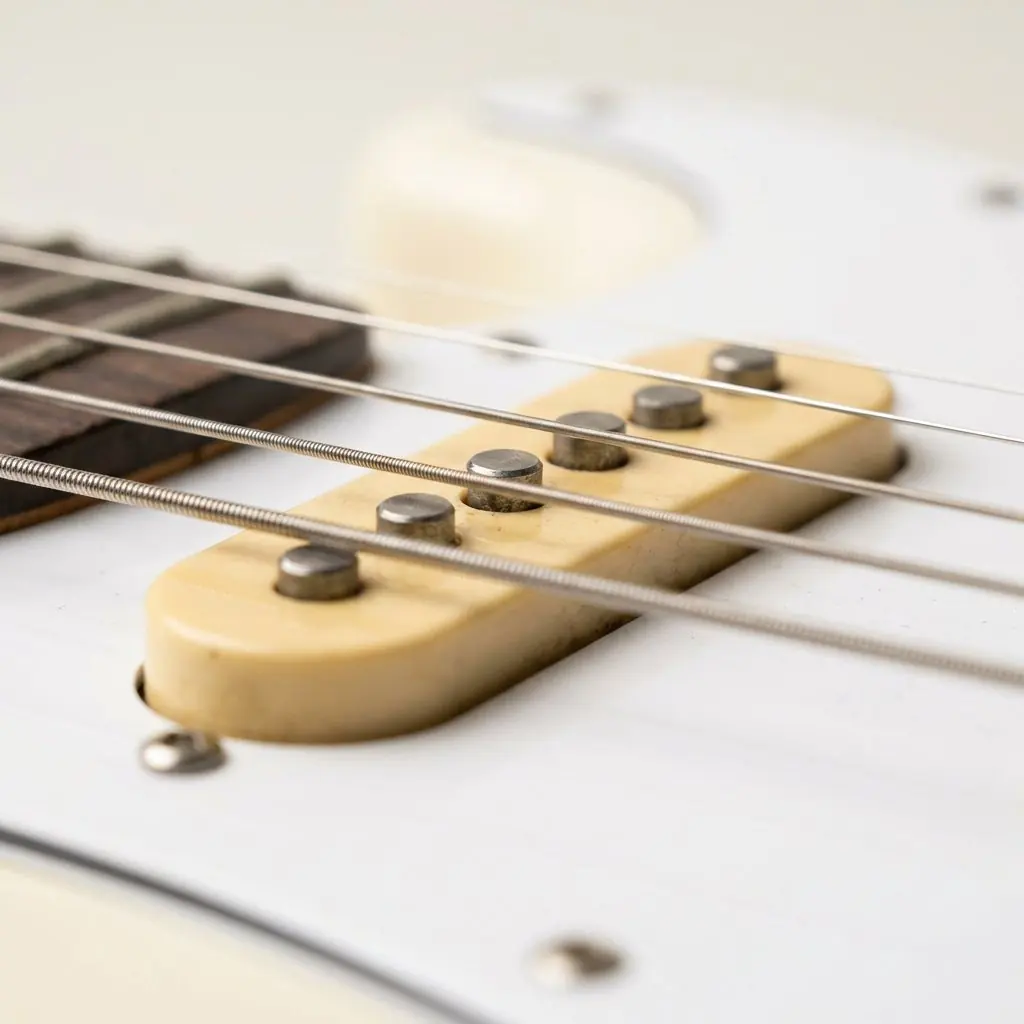
Single-coil pickup
Clear, chimey sound. The clean tone of pop, funk, blues, and indie. With only one coil, it has a buzzing noise (hum). It gets louder near fluorescent lights, but it's not a defect.
Decide the shape before the brand. Body and pickups on electric, body size on acoustic, neck width on classical, and pickup layout on bass decide the sound and feel. Once the shape is set, the brand follows naturally from your budget.
Each card lists suited genres, pros, cons, and a one-line tip. Photos show the typical shape, without brand logos.
On an acoustic, body size is the volume and character of the sound. The bigger it is, the louder it is and the richer the lows; the smaller it is, the more comfortable it is sitting down and the clearer the notes. A solid wood top is called a 'solid top,' and you can find one for under $300.
Nylon strings, not steel. Soft, quiet, and easier on your fingertips. There are two kinds: the traditional style with a wide neck, and the crossover with a narrower neck and a pickup.
Four (or five) strings, thick and long. You play single notes rather than chords and make the rhythm together with the drums. You don't need to learn guitar first. The pickup layout (P, J, active) decides the sound. See the 3 bass pickups for details.
A pickup turns string vibration into electricity. Two instruments of the same shape sound like different instruments if their pickups differ. Electric and bass use different pickups.
Clear, chimey sound. The clean tone of pop, funk, blues, and indie. With only one coil, it has a buzzing noise (hum). It gets louder near fluorescent lights, but it's not a defect.
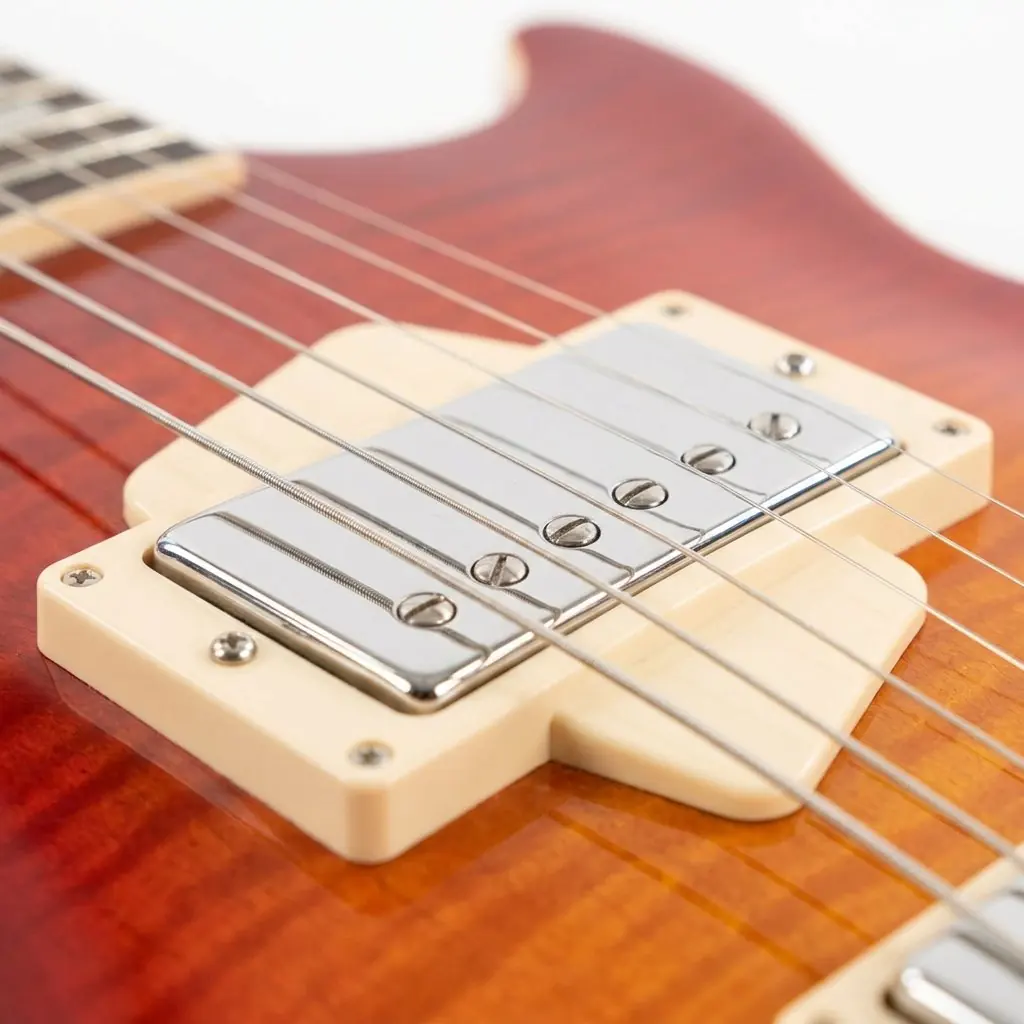
Thick, heavy sound. Two coils paired to cancel noise. The drive tone of rock, hard rock, and metal. Its clean sound is rounder than a single-coil's.
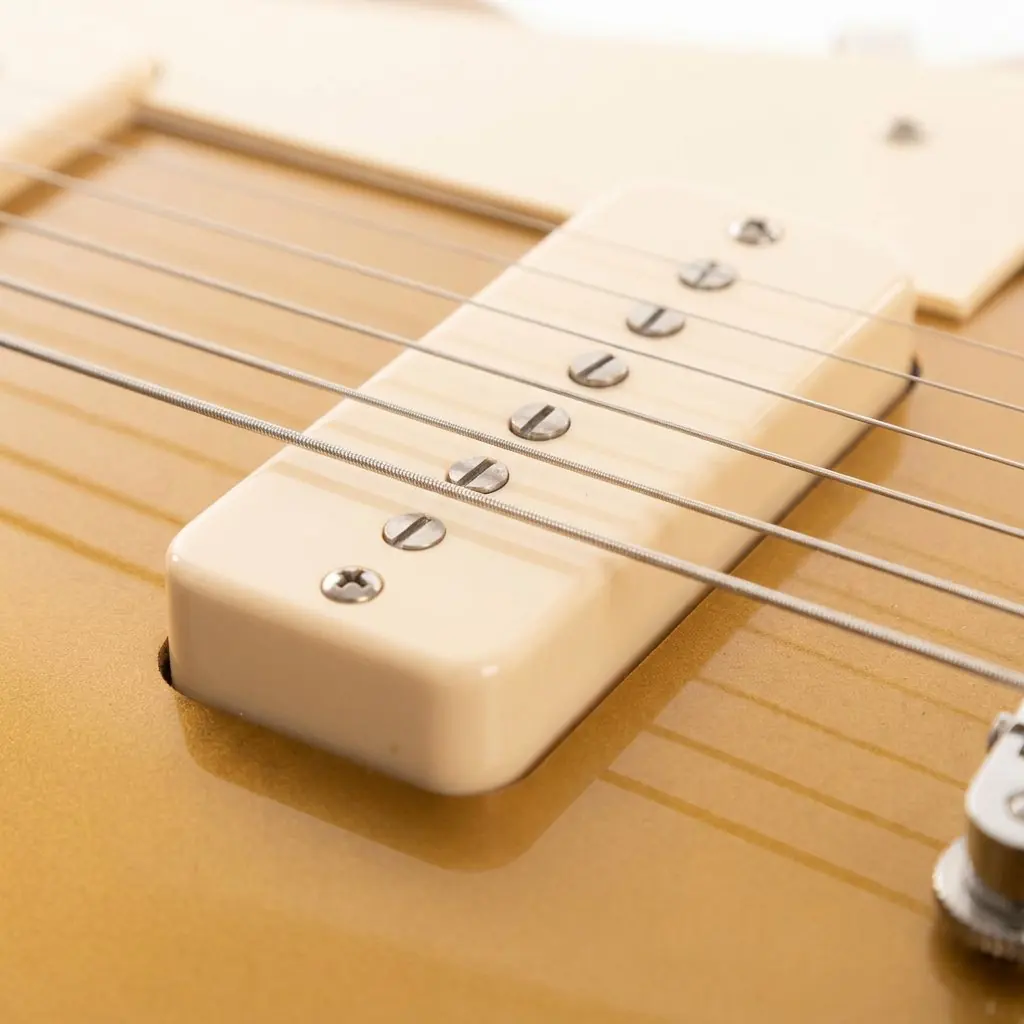
In between the two. A big single-coil, so it has a bit of a single's clarity and a bit of a humbucker's thickness. Gritty and warm, loved in blues, garage rock, and indie.
Why HSS is a safe bet. Single-coils at the neck and middle, a humbucker only at the bridge. Singles for clean, the humbucker for drive. If you don't know your genre yet, this layout is the safest.
Bass pickups even go by different names than electric ones. Instead of humbuckers and P-90s, they're split-coil, single-coil, and soapbar, and these layouts are where the names P-type, J-type, and modern come from.
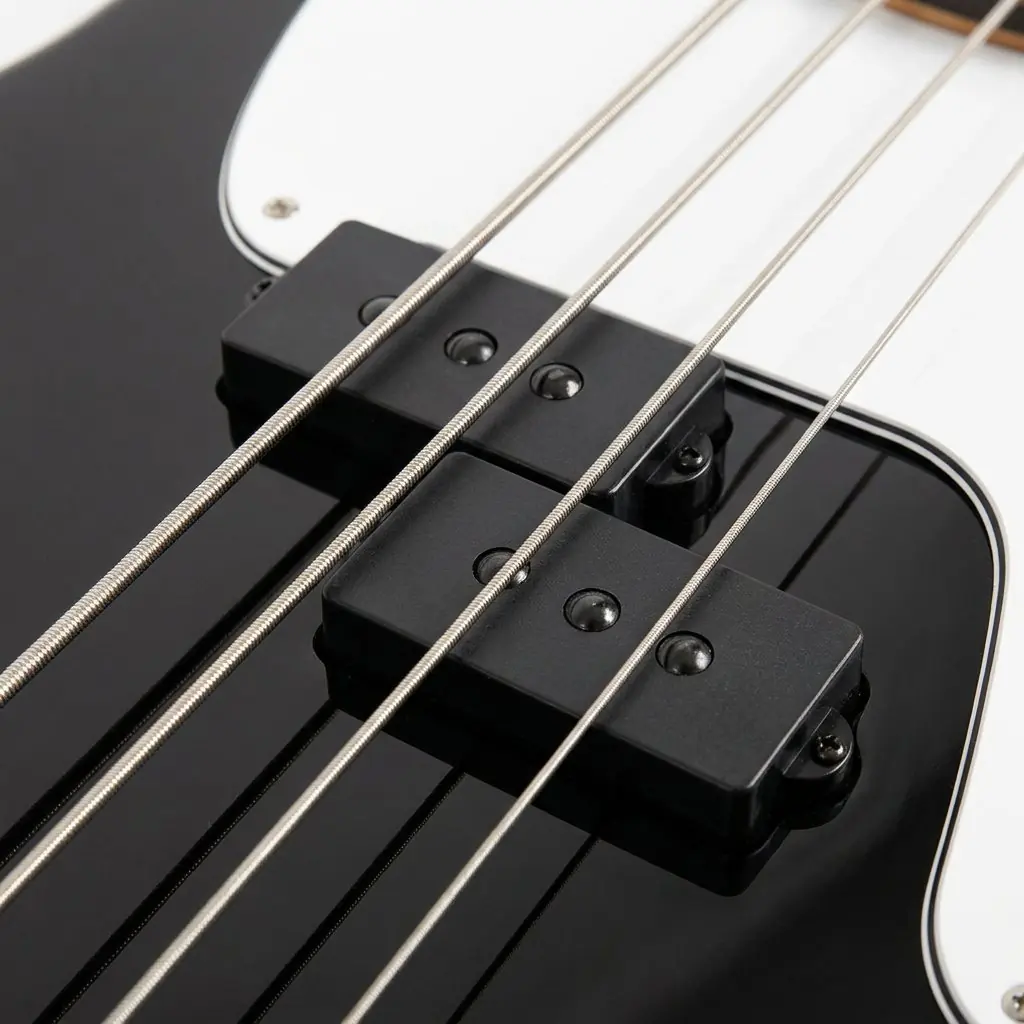
Thick, solid low end. The pickup is split into two offset halves. Like a humbucker, the halves cancel each other's noise, so it's quiet. It doesn't get buried in a band and locks in with the drums: the standard for backing in rock and pop.
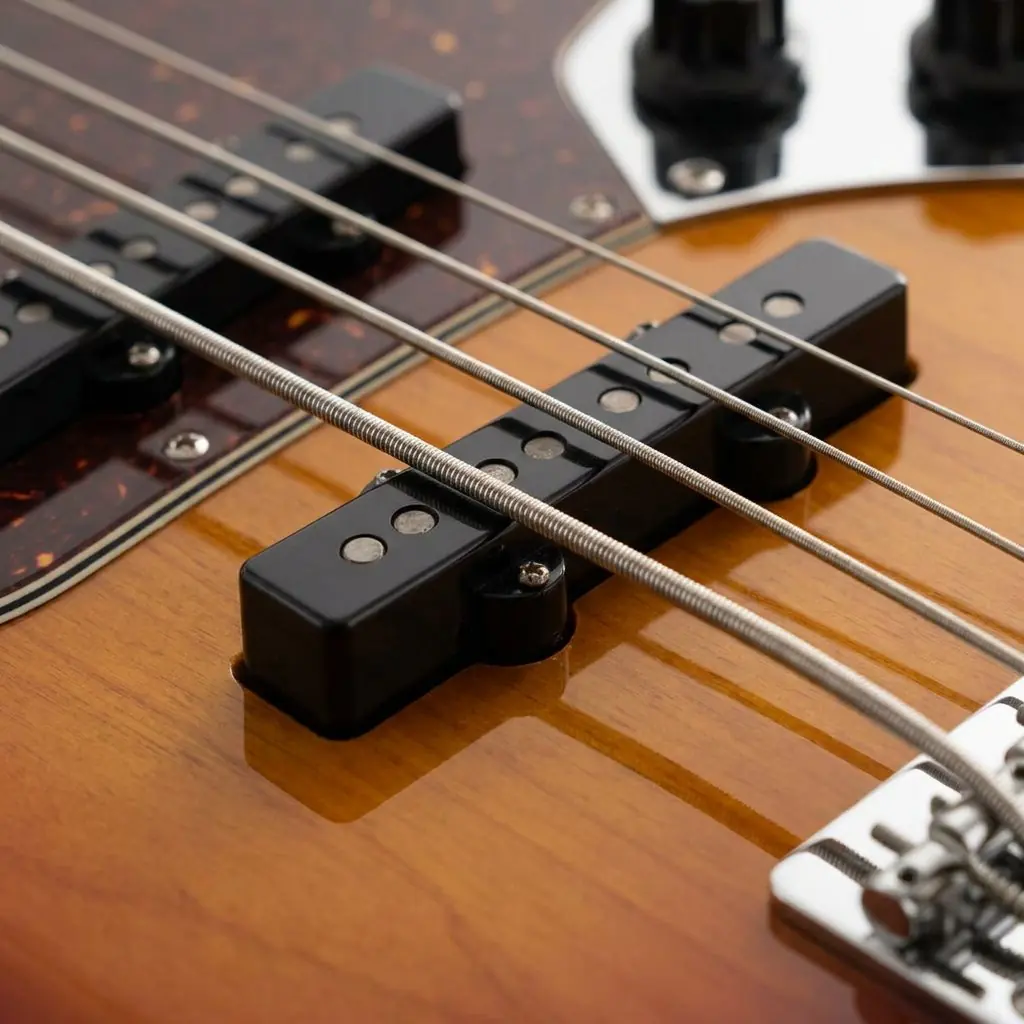
Bright, clear sound. Two thin, long pickups, one near the neck and one near the bridge. Balancing the two volumes changes the tone over a wide range, and finger nuance comes through well, so it's good for both slap and fingerstyle. With only one turned up, there's a hum; with both up, it goes away.
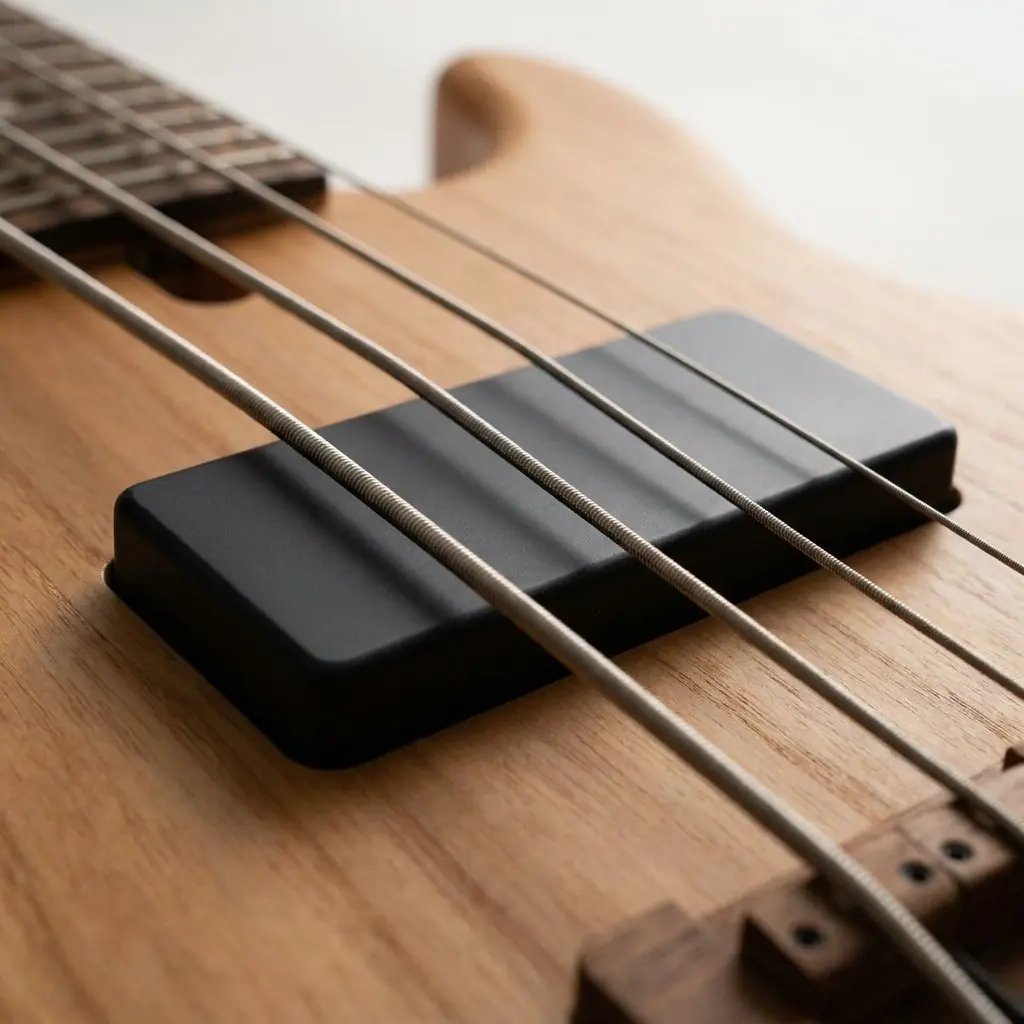
High output and a wide range of tones. A large rectangular cover shaped like a bar of soap hides the pole pieces. For metal, modern styles, and session work.
Most are paired with an active preamp, so the instrument's knobs let you raise or cut bass and treble directly. Needs a 9V battery; when it dies, there's no sound.
Why PJ is a safe bet. A P (split-coil) in front and a J (single-coil) at the back. You can blend the P's thickness and the J's clarity with the volume knobs, so it's the safest choice if you don't know your genre yet. The Yamaha TRBX and BB series are typical examples.
Start with a 4-string bass. Make a 5-string your second bass, once your songs really need the low B string.
Most words on a spec sheet won't make a noticeable difference in your first year. What you will notice is the weight and how it feels to press the strings. Here are the only three things to check for each instrument.
| Instrument | Check ① | Check ② | Check ③ | Can skip |
|---|---|---|---|---|
| Electric | Pickup layout (SSS / HSS / HH) | Scale length (25.5" / 24.75") | Bridge (fixed / tremolo / Floyd Rose) | Body wood, number of frets, finish |
| Acoustic | Solid top or not (solid-wood top) | Body size (dreadnought / OM / GA / mini) | Neck width (43mm for strumming / 44–45mm for fingerstyle) | Back and side wood, bracing name, pickup (if you only play at home) |
| Classical | Size (4/4 / 3/4) | Top wood (cedar: warm / spruce: bright) | Neck width (52mm traditional / 48mm crossover) | Back and side wood, tuner brand |
| Bass | Pickup layout (P / J / PJ / active) | Scale length (34" long / 30" short) | Strings (4 / 5) | Body wood, number of frets, number of knobs |
| Spec term | Common values | What it actually means for a beginner |
|---|---|---|
| Body wood | Alder · ash · mahogany · poplar · basswood | Weight. Mahogany (LP-style) is heavy at around 4kg; alder and poplar are 3–3.5kg. The difference in sound is much smaller than the difference pickups or amps make. |
| Solid top · all-solid · laminate | Acoustic, classical | Solid wood sounds better over time but is sensitive to humidity. Laminate is tough and costs less. For beginners, a solid top is plenty. |
| Neck thickness and shape | Modern C · Slim Taper · Wizard | The one you'll notice most. A thin neck is fast and comfortable for smaller hands; a thick neck feels stable if your hands are big. It's the one reason to hold a guitar in a store before you decide. |
| Scale length | 25.5" · 24.75" · 650mm · 34" | String tension. Shorter means slinkier strings, so bends and barre chords get a little easier. If your hands are small, go shorter. |
| Bridge | Tremolo · hardtail · Tune-o-matic · Floyd Rose | Tuning stability and how hard strings are to change. For beginners, a fixed bridge is easier. A Floyd Rose takes 30 minutes to restring. |
| Finish | Poly · nitro · satin | Durability. Beginner-priced guitars are almost all poly (tough). Nitro has a vintage vibe but needs more care and costs more. |