How to tune a guitar — standard tuning (EADGBE) in three minutes
If you're out of tune, everything you play sounds wrong, and that's what makes people quit. That's why even the cheapest beginner kit never leaves out a tuner. A habit of tuning for 30 seconds every time before you play is all it takes.
Standard tuning — E A D G B E from the 6th string
On guitar, the thickest string is the 6th and the thinnest is the 1st. Acoustic, electric and classical all use the same standard tuning.
| Strings | Note | Frequency |
|---|---|---|
| 6th (thickest) | E | 82.41Hz |
| 5th | A | 110.00Hz |
| 4th | D | 146.83Hz |
| 3rd | G | 196.00Hz |
| 2nd | B | 246.94Hz |
| 1st (thinnest) | E | 329.63Hz |
Bass: a 4-string is E A D G from the thickest string (41.20 · 55.00 · 73.42 · 98.00Hz). A 5-string adds a B (30.87Hz) below that.
Three minutes with a tuner — step by step
- In a quiet spot, hold the guitar close to the mic (or tuner).
- Starting from the 6th (thickest) string, pluck one string at a time.
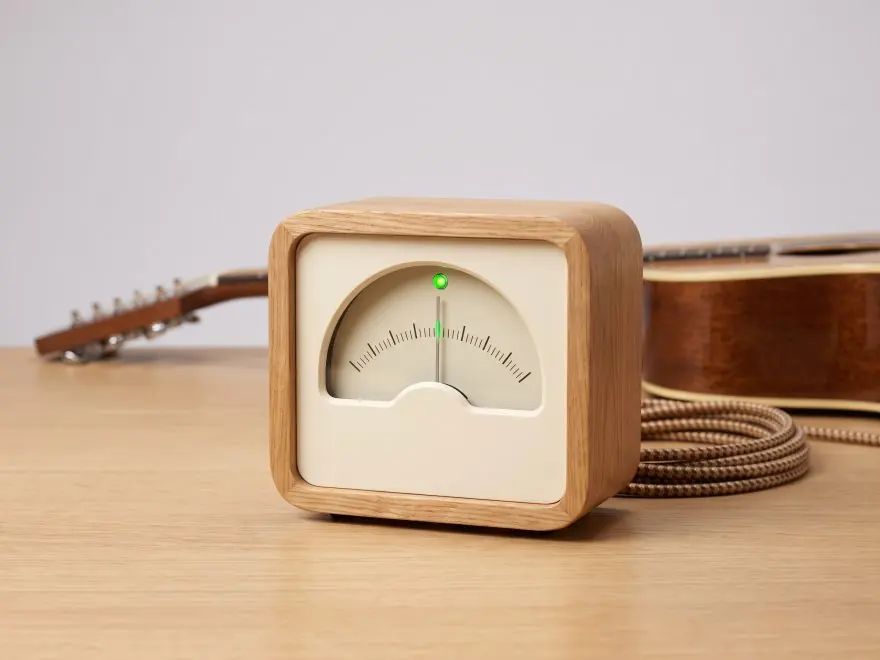
- Turn that string's tuning peg until the needle reaches the green line in the center.
- After all six strings, go around once more. Tightening the strings changes the pull on the neck, so strings you tuned earlier may shift a little.
Always tune by tightening up to the note
If you go past the target note, don't just loosen it a little. Instead, loosen it well below the note, then tighten back up to it. If you tune by loosening, the string soon slips again. New strings keep slipping for a day or two, so just retune each time.
Which tuner to use
- Browser tuner — First Guitar's tuner works right away through your mic, with nothing to install and no sign-up. You can choose 6-string guitar, 4-string bass or 5-string bass, and the mic audio is processed only in your browser and never sent anywhere.
- Clip-on tuner ($16–22) — a small tuner that clips onto the headstock. It's what goes in the cheapest starter set.
- Tuner pedal ($63–109) — for noisy rehearsal rooms and stages. If you only play at home, you don't need one.
- A tuner built into the guitar — acoustics with a pickup (EA) often have a tuner in the preamp.
When it isn't working
- The tuner can't pick up the sound — check the mic permission under the lock icon at the left of the address bar, and cut down fan or air-conditioner noise.
- No mic, or can't use one — tap a string on the tuner screen to play a reference tone for 1.5 seconds. Tuning to it by ear is good practice, too.
- It keeps going out of tune — that's normal with new strings. If it keeps happening after a few days, ask a music store to check the tuning pegs and how the strings are wound.
Turn on your mic and start plucking from the 6th string. Tuning and posture with photos are on the Basics page.