GearElectric
Playing electric guitar at home on headphones — headphone amps, desktop amps, audio interfaces
An electric guitar needs an amp to make sound. But in a studio apartment or at night, a speaker amp is hard to use. There are three ways around it.
- A headphone amp that plugs straight into the guitar
- A small desktop amp with a headphone jack
- An audio interface that connects to a computer or phone
Which one fits depends on whether you'll ever need to play out loud and whether you'll record.
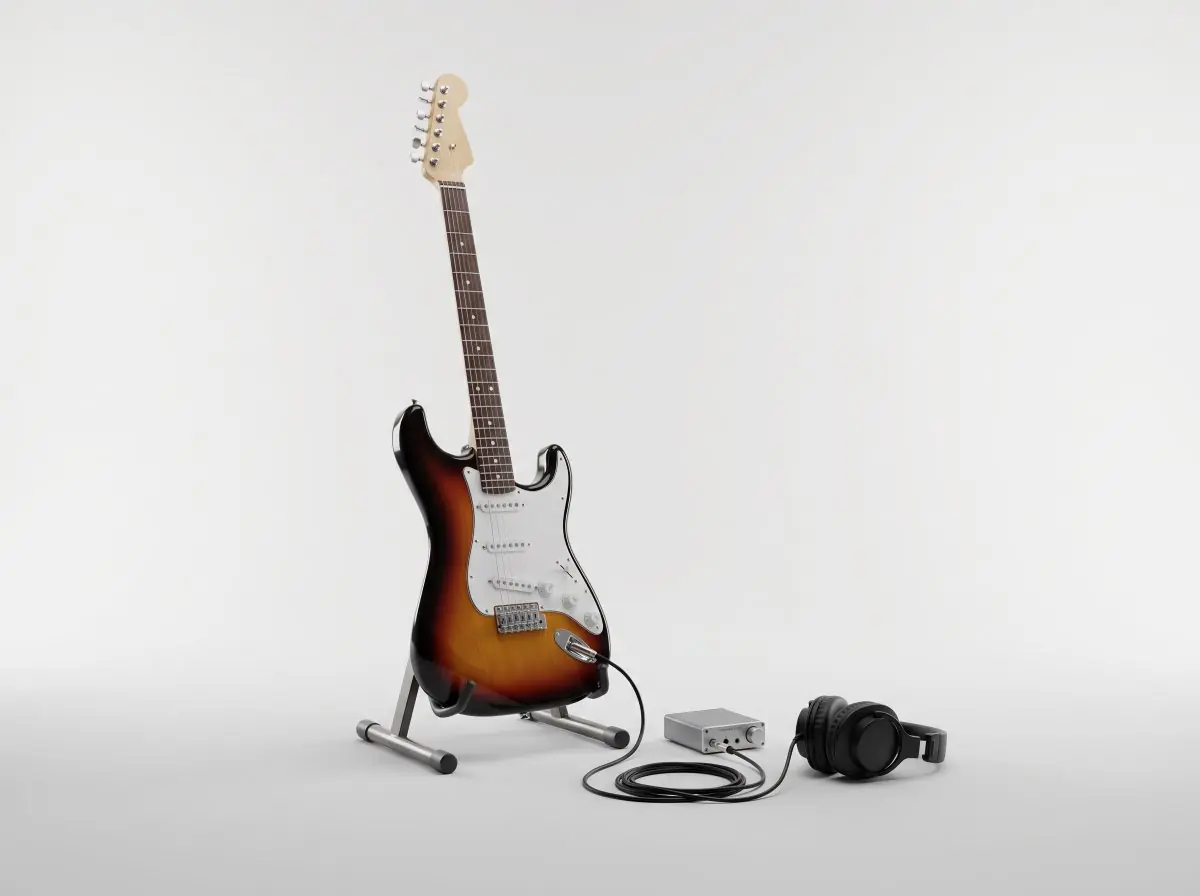
The three options compared
| Option | What it is | Best for | Good to know |
|---|---|---|---|
| Headphone amp | A finger-sized amp that plugs into the guitar's jack. No speaker | Homes where you can only play at night, studio apartments and dorms, or a first month when you'd rather put the amp money into the guitar | Can't be used to play for others or with a band. Headphones needed separately |
| Desktop / smart amp | A small amp that sits on your desk. Many amp sounds and effects, Bluetooth backing tracks | Most people who play alone at home. Built to sound good even at low volume | Not loud enough to play along with drums. Some models handle detailed settings in an app |
| Audio interface | A device that connects your guitar to a computer or phone. An amp sim (software) creates the amp sound, and that's what gets recorded | People aiming to make cover videos or record who have a computer and headphones (or monitor speakers) | No sound unless the computer is on. Expect to get stuck once on driver and latency settings. You can start with a free amp sim |
Headphone amps
- Vox amPlug 3 ($51–60) — a tiny unit with a folding plug that goes straight into the guitar's jack. Each model has its own fixed amp sound (AC30, High Gain and others). Runs on batteries. It's the amp in the cheapest starter set.
- NUX Mighty Plug Pro ($109) — play backing tracks over Bluetooth, and record over USB-C.
- Boss Katana:GO ($119–140) — switch between guitar and bass modes to practice both with one unit. Bluetooth backing tracks and USB-C recording.
- Fender Mustang Micro Plus ($130) — 25 amps and 25 effects, with presets managed in a dedicated app. Built-in tuner.
Desktop amps with a headphone jack — speaker by day, headphones at night
All of the products below have a headphone jack: use the speaker when you can make noise, and headphones at night.
- Blackstar Fly 3 ($77–80, 3W) — a tiny combo that also runs on batteries. Its speaker-emulated output doubles as the headphone jack.
- Boss Katana Mini / Mini X ($115–170) — the Mini is the basic model with a wired backing-track input (AUX). The Mini X is louder, with Bluetooth and a rechargeable battery.
- Positive Grid Spark Mini / Spark GO ($99–174) — portable and rechargeable, with backing-track features in a dedicated app.
- Yamaha THR5 / THR10II ($210–370) — desktop amps shaped like an old radio. The THR10II can play music over Bluetooth.
- Positive Grid Spark 2 / Spark 40 ($224–244) — app features: Auto Chords shows a song's chords automatically, and Smart Jam creates backing parts.
Audio interfaces — for recording too
- IK Multimedia iRig HD X ($130) — for guitar and bass only. One USB-C cable connects it to your phone or computer. No mic input.
- Audient EVO 4 ($180) — Smart Gain sets the input level automatically, so you don't have to set the gain yourself. You can record guitar and a mic together.
- Focusrite Scarlett Solo / 2i2 (4th Gen) ($160–225) · Universal Audio Volt 1 / 2 ($139–219) · MOTU M2 ($200)
If you plan to record guitar and vocals together, the two-input 2i2, Volt 2 and M2 are easier.
If you only record once in a while, a headphone amp with USB recording (NUX Mighty Plug Pro · Boss Katana:GO) can do the job instead.
So which should you choose?
| Situation | What to choose |
|---|---|
| You can only play at night and want to save on an amp | A headphone amp ($51–109) |
| You can make noise by day but need quiet at night | A desktop amp with a headphone jack |
| Your goal is cover videos or recording | An audio interface (or a headphone amp with USB recording) |
| You plan to play with a band soon | A modeling combo — but at 40W or more you'll barely be able to turn it up at home, so check for a power-reduction switch or a headphone jack |
If your first amp should handle band practice too, see the first amp guide. It compares the Boss Katana, Positive Grid Spark and Yamaha THR by use.
Start with the amp that fits your situation
In Choose an amp, answer "home, mostly headphones" for where you'll play, and products with a headphone output come up first.
In Choose an amp, answer "home, mostly headphones" for where you'll play, and products with a headphone output come up first.